


Events Calendar
Current Weather
Algonquin Park Ice Conditions
Topics Below |
|||
 |
 |
 |
 |
All lakes in Algonquin Park remain snow and ice covered. Warm weather conditions and heavy rain during early March has reduced snow depth and run off increased water levels eroding ice in faster moving rivers.
Algonquin Park is one of the last areas to shed its ice cover in south-central Ontario. April conditions are extremely important in determining the ice out date for Algonquin Park. Heavy rainfall events, high winds, and warm temperatures all help to speed up ice removal, while cold, snowy conditions can slow the removal of ice from lakes. Watch the Algonquin Park weather forecast for conditions, which are generally colder and snowier than surrounding areas as a result of the Park’s high elevation (the highest in southern Ontario).
This webpage, provided by The Friends of Algonquin Park, tracks the progress and history of ice out in Algonquin Park. Check back frequently for updates.
 Please remember that The Friends of Algonquin Park advises against ice travel due to a range of environmental variables and the difficulty in detecting hazards. Be safe, stay off the ice. Park visitors are encouraged to stay away from fast moving and icy cold water at this time of year.
Current Conditions at Lake of Two Rivers
Monitor the status of spring by observing conditions at Lake of Two Rivers in Algonquin Park. The image below updates about every 10 minutes during daylight hours, just refresh your browser. Lake of Two Rivers is representative of conditions on medium sized lakes in Algonquin Park. This image is brought to you by The Friends of Algonquin Park, in cooperation with Killarney Lodge. For a record of changes see recent images below.
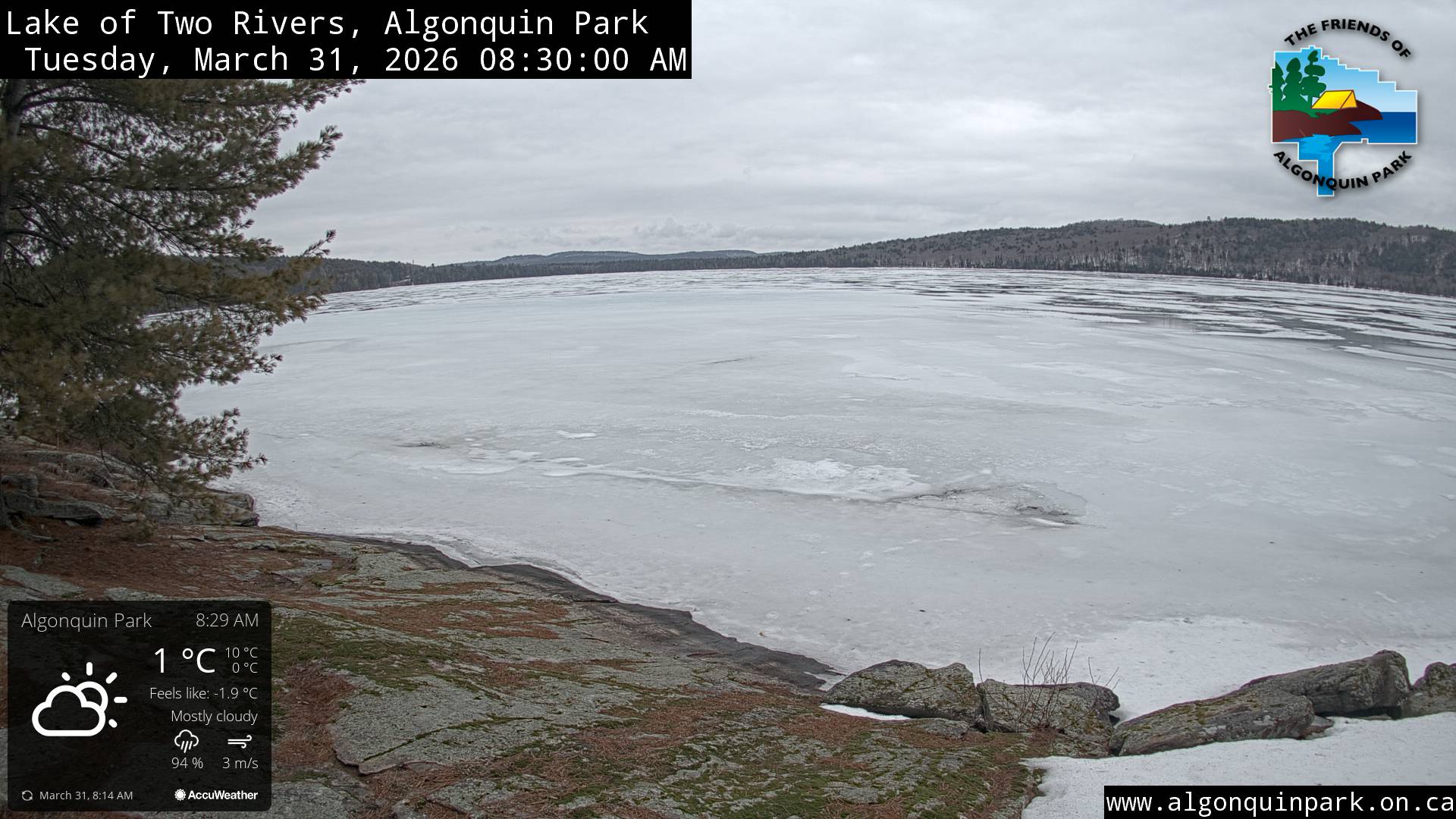
Lake of Two Rivers is a medium sized lake located in south central Algonquin Park. Lake of Two Rivers entire lake surface, covering 315 hectares (780 acres), is easily observed from Highway 60 allowing for detailed freeze and thaw data to be recorded over the years. On average, Lake of Two Rivers freezes on December 11 and thaws on April 25. Ice out dates can vary widely and in the past 45+ years, ice out on Lake of Two Rivers has ranged from as early as March 30 (2012) to as late as May 10 (2018). On average Lake of Two Rivers sheds its ice cover 3 days earlier than Lake Opeongo, Algonquin Park's largest lake, and the basis for declaring Algonquin Park's ice out (see below for historical ice out information).
Current Snow Depth in Algonquin Park
The snow depth recorded by Environment Canada at Algonquin Park's East Gate over the last 2 weeks. During the early spring, snow depth in Algonquin Park varies greatly depending upon location. On south facing slopes that receive the strongest spring sunshine the ground can be bare, while on shaded north facing slopes snow depths can exceed the values listed below. Deep snow on lakes slows the melting of ice and lengthens the duration of ice cover remaining.
Algonquin Park Images - Spring 2026
A selection of recent images from Algonquin Park. See the caption for the date and location.
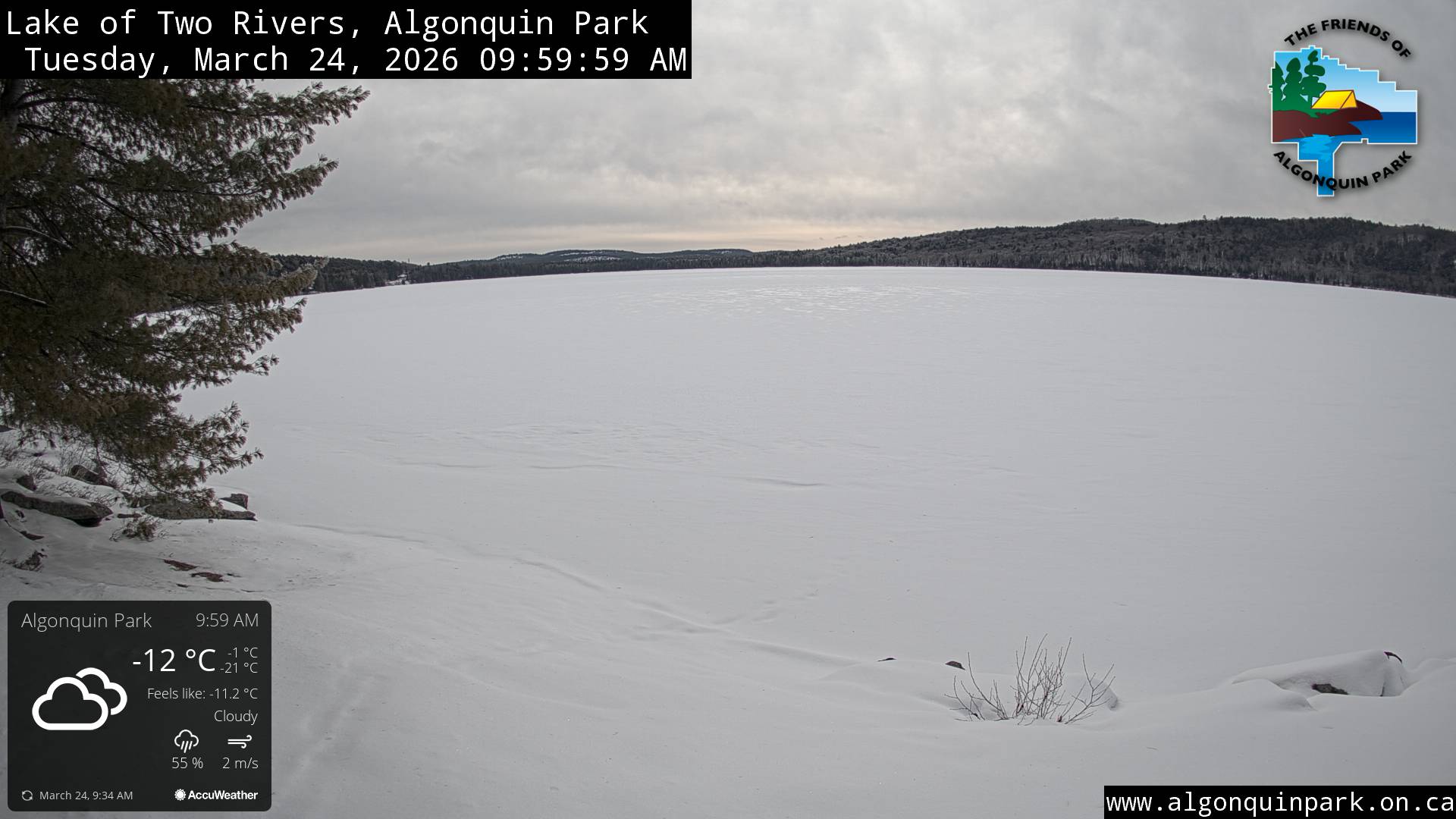
Image: Lake of Two Rivers in Algonquin Park on March 24, 2026 (click to enlarge).
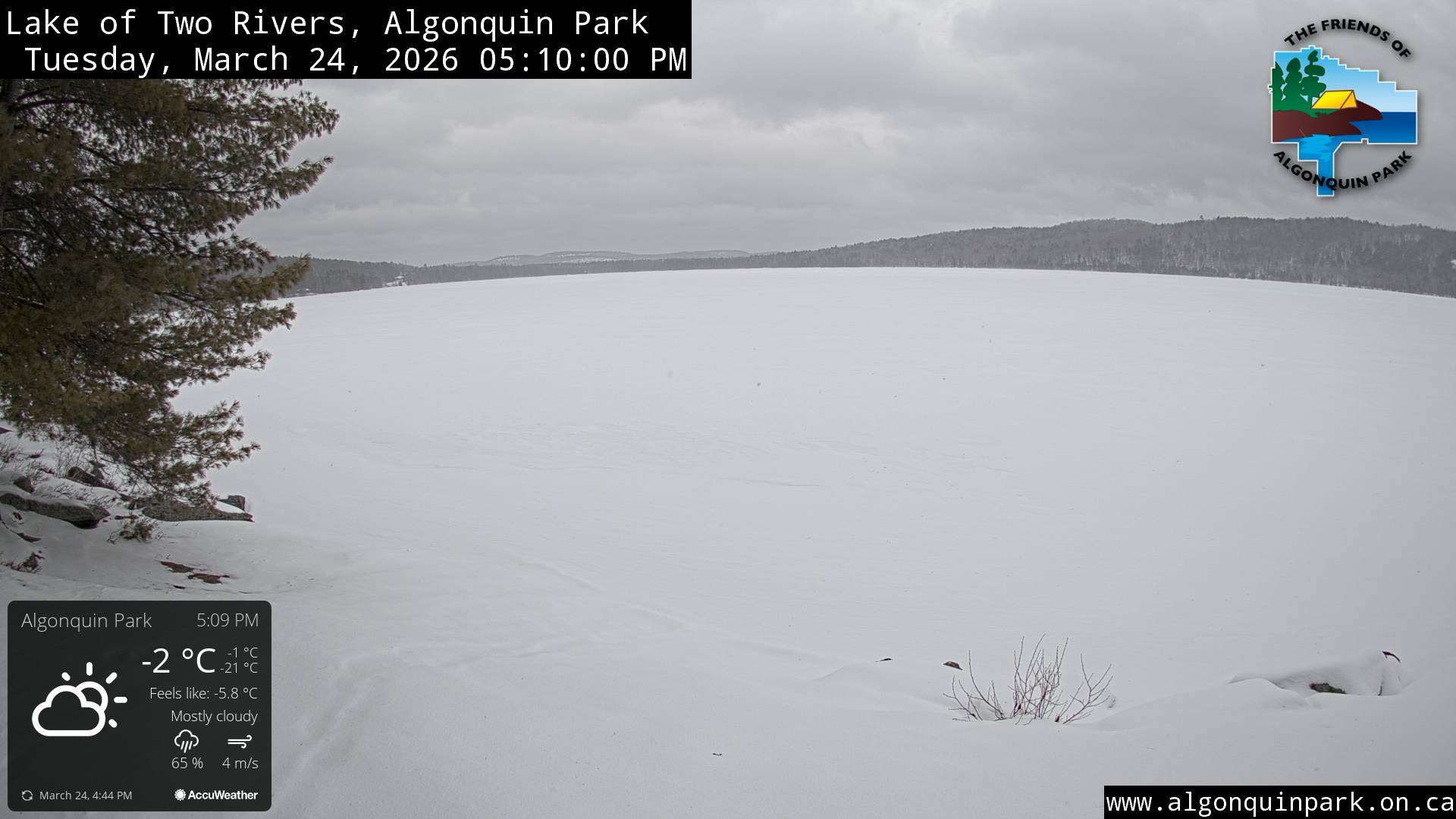
Image: Lake of Two Rivers in Algonquin Park on March 24, 2026 (click to enlarge).
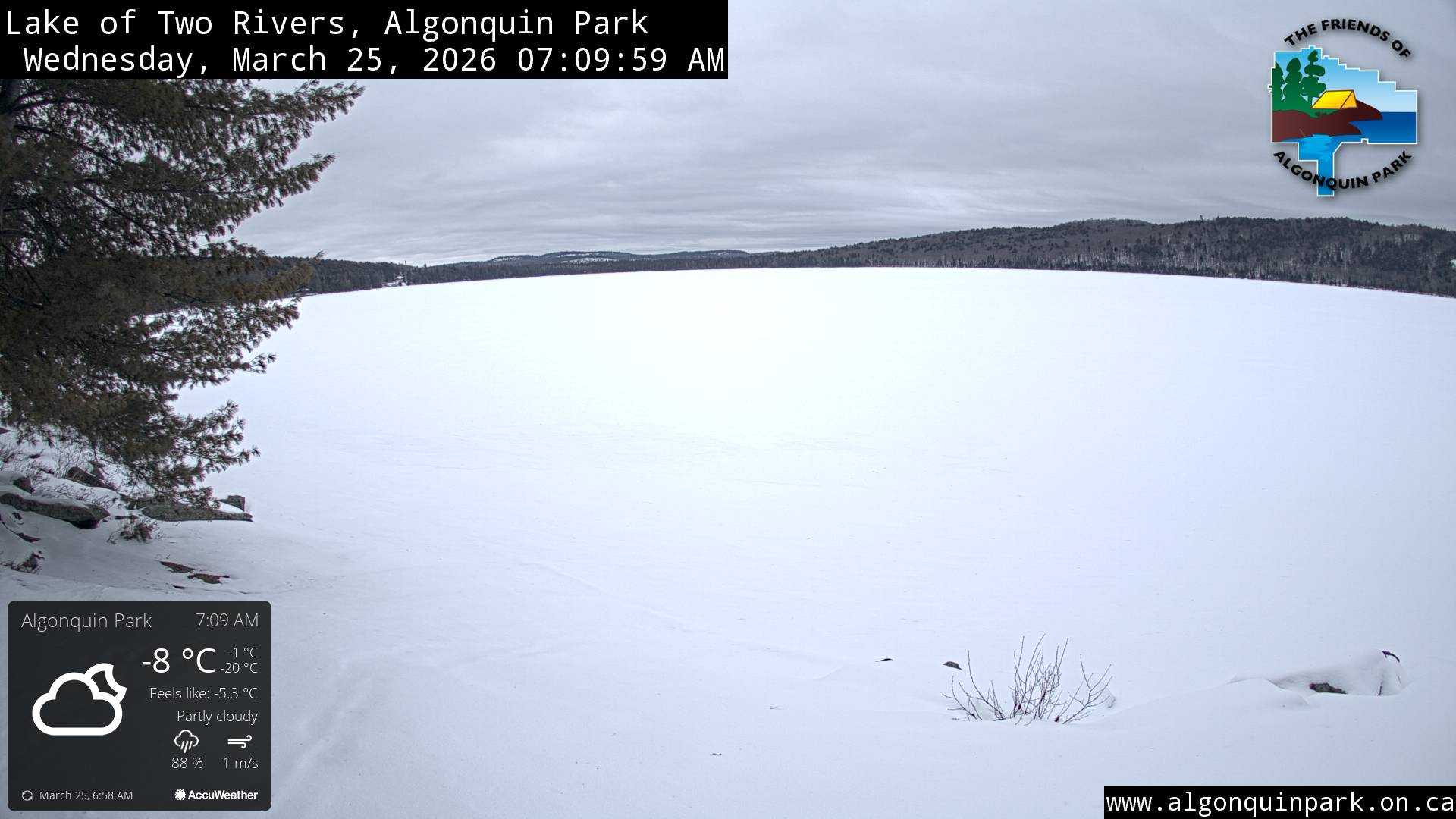
Image: Lake of Two Rivers in Algonquin Park on March 25, 2026 (click to enlarge).
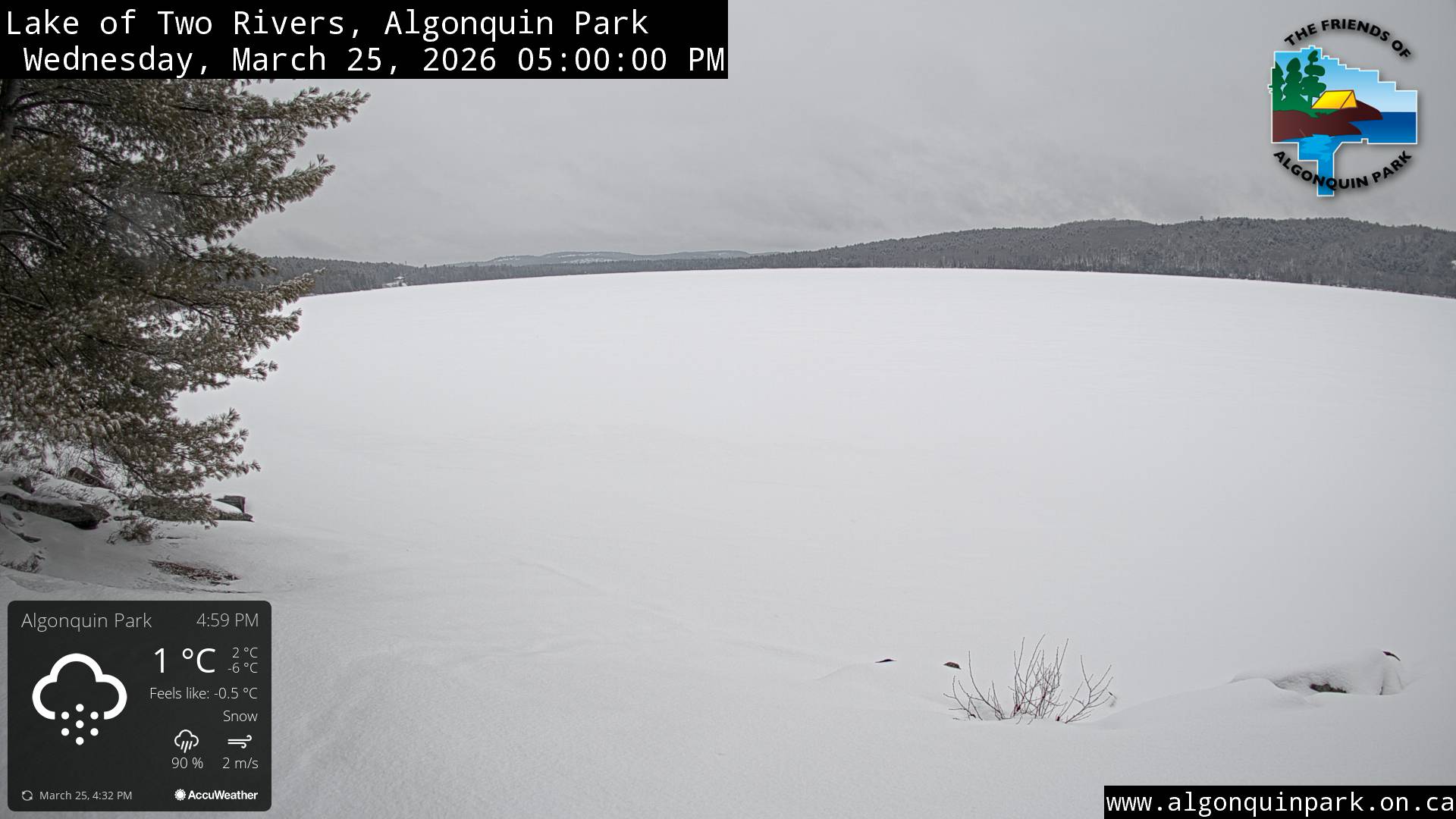
Image: Lake of Two Rivers in Algonquin Park on March 25, 2026 (click to enlarge).
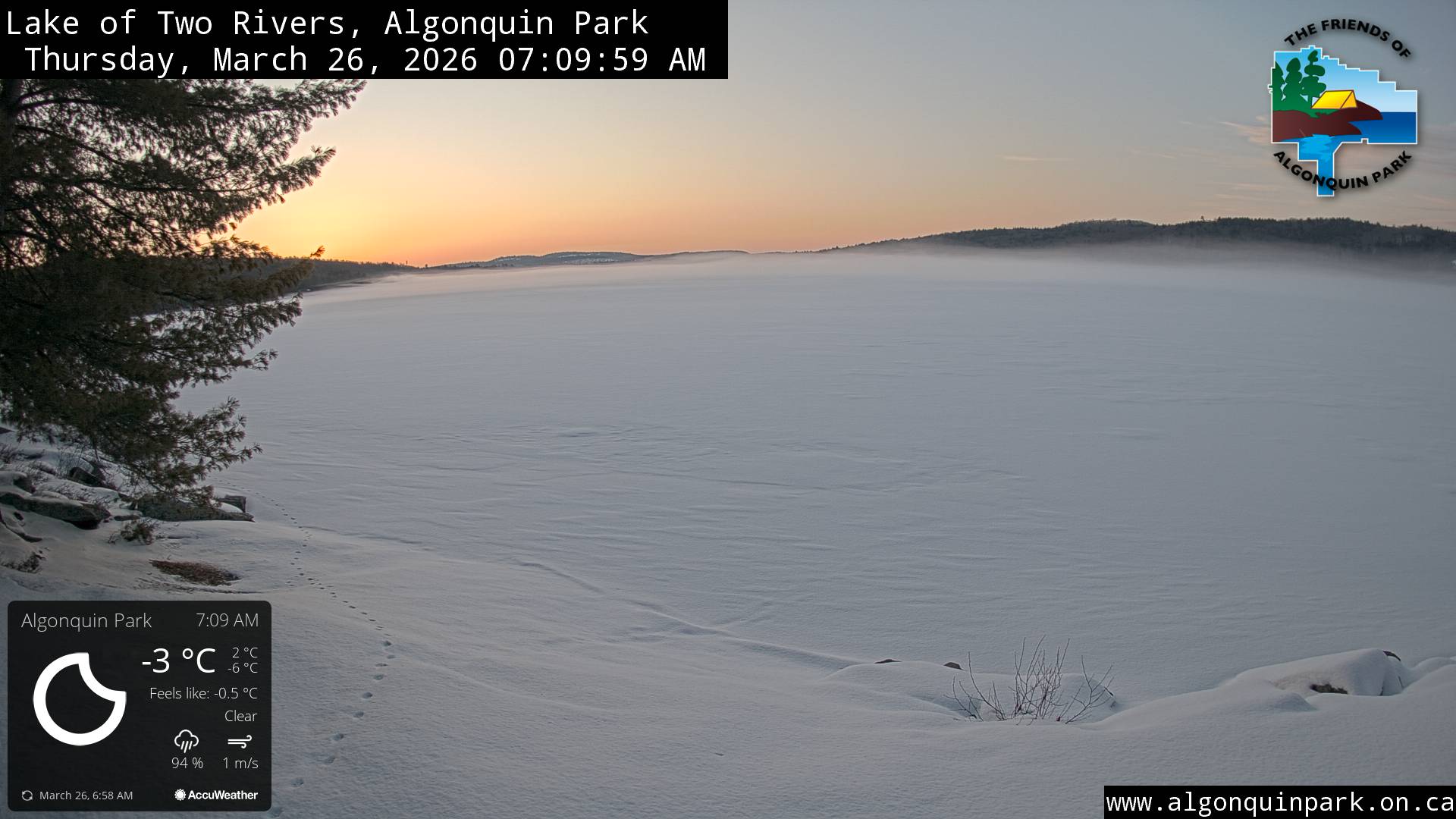
Image: Lake of Two Rivers in Algonquin Park on March 26, 2026 (click to enlarge).
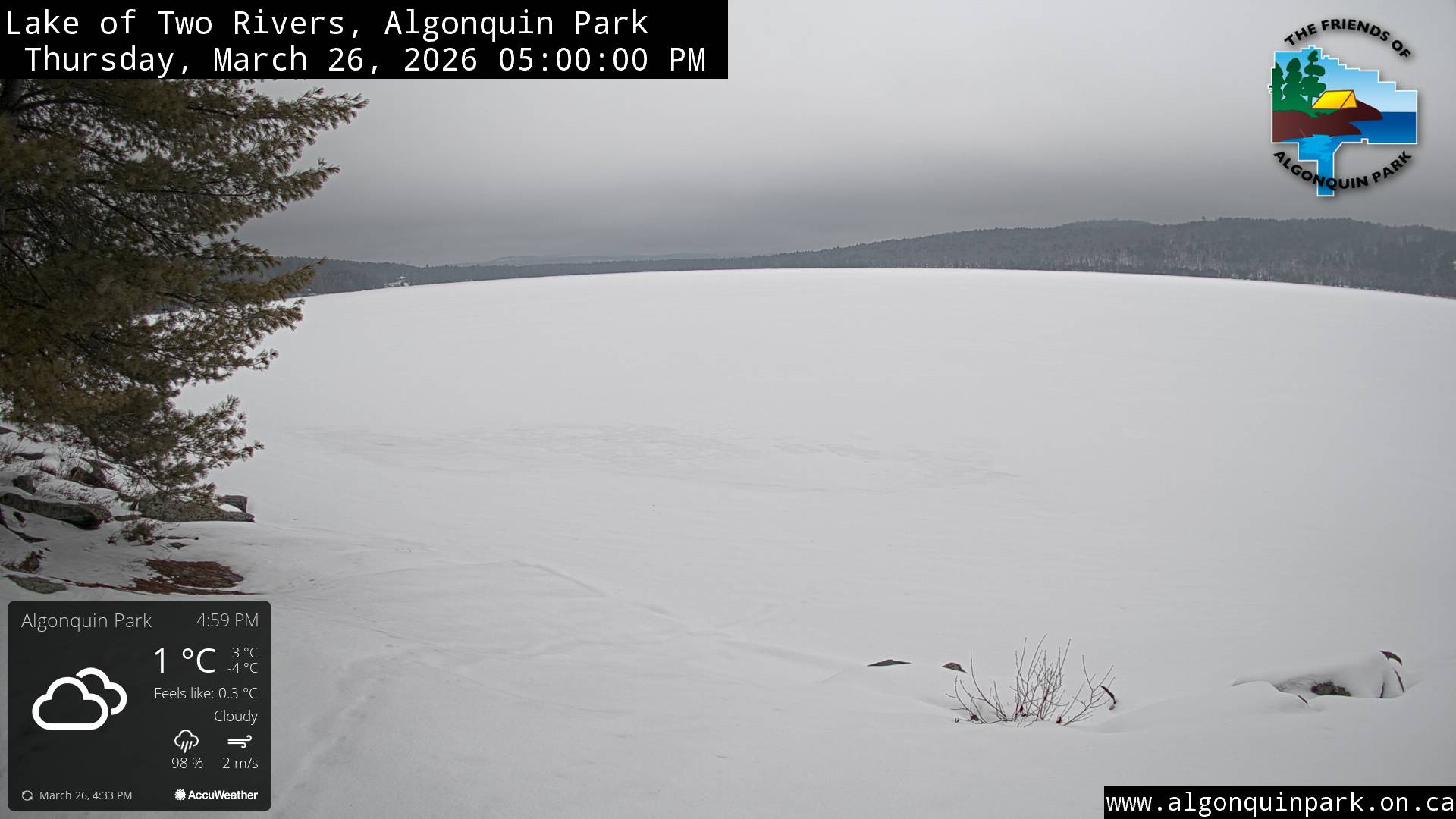
Image: Lake of Two Rivers in Algonquin Park on March 26, 2026 (click to enlarge).
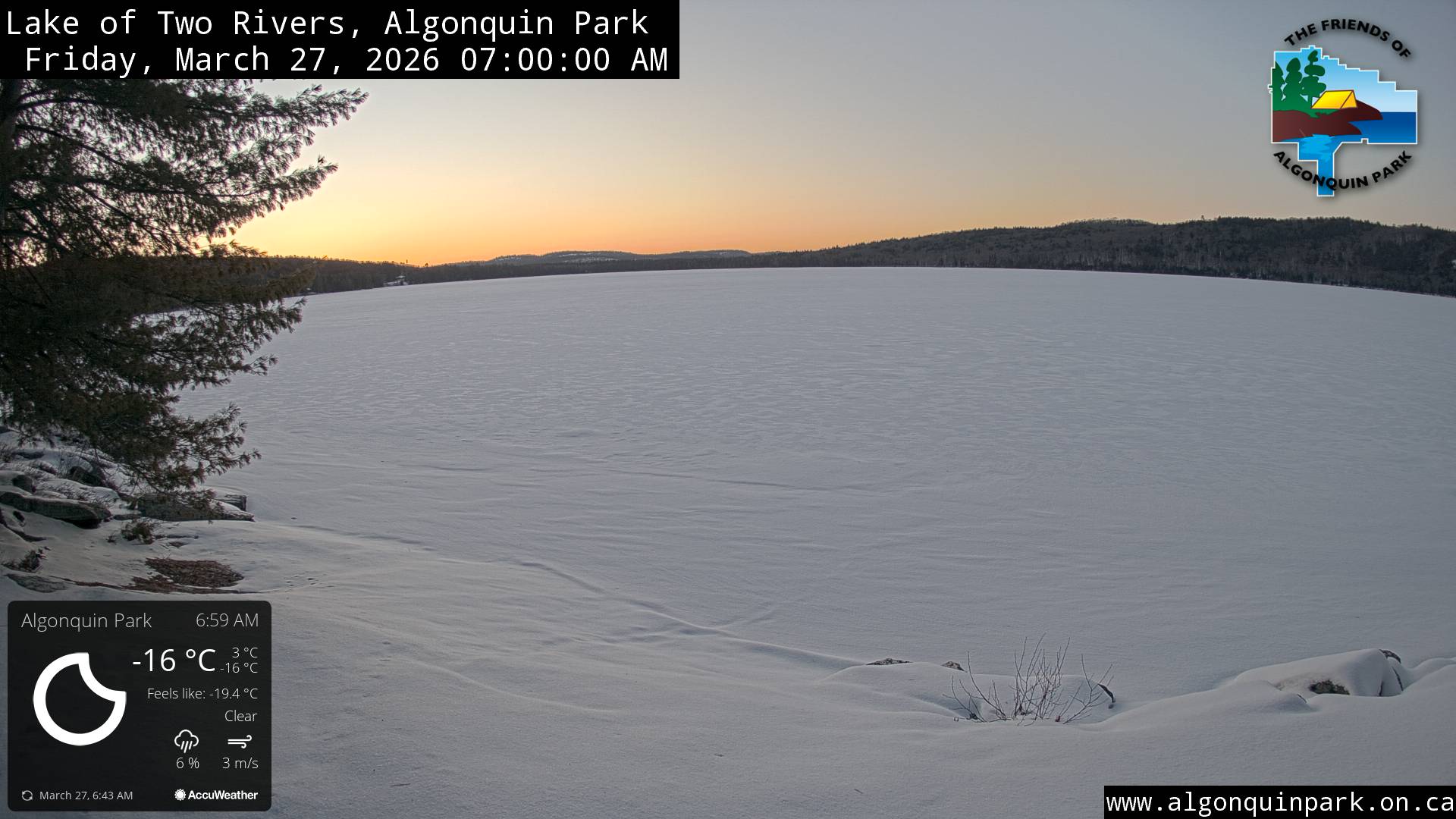
Image: Lake of Two Rivers in Algonquin Park on March 27, 2026 (click to enlarge).
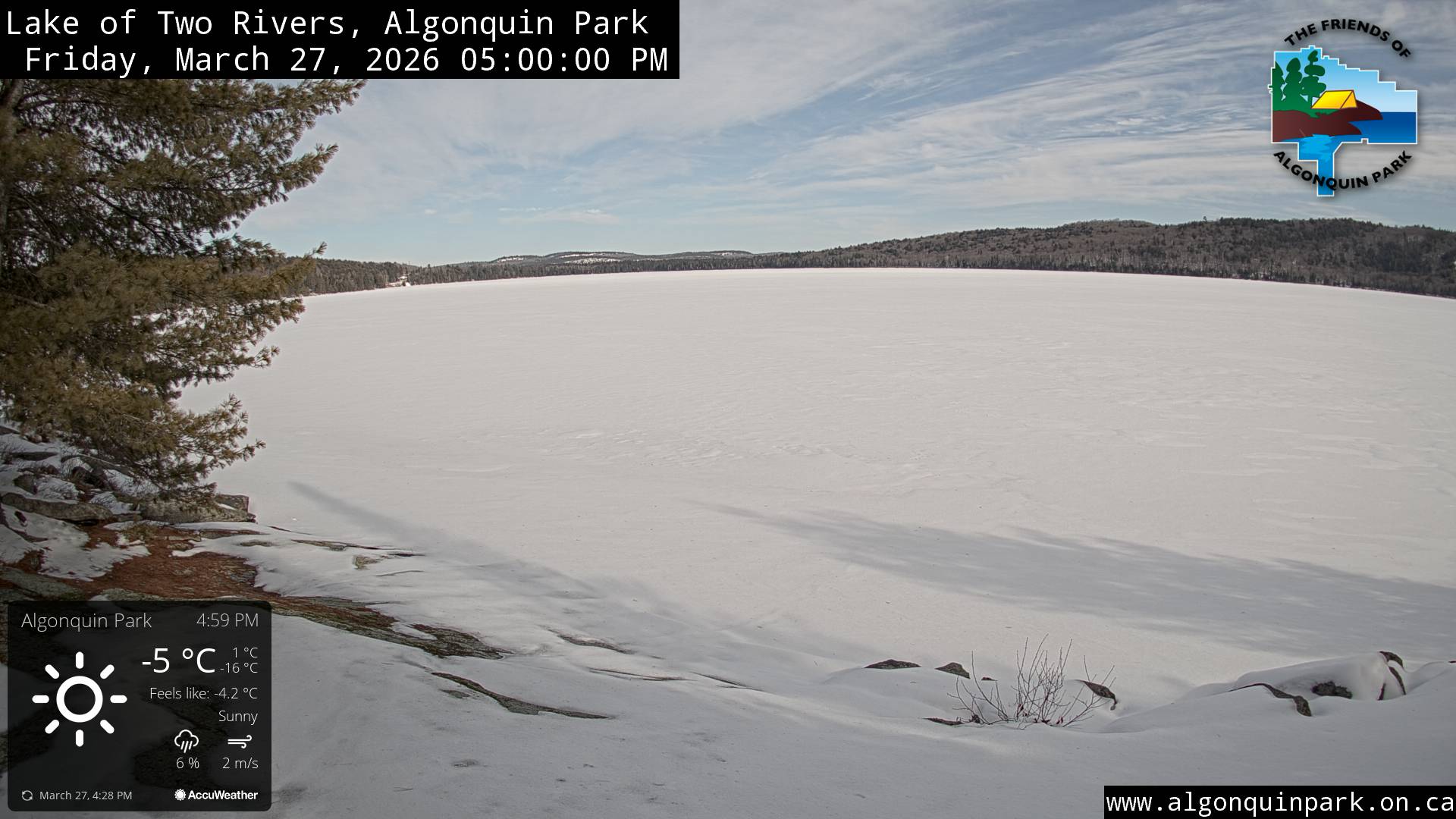
Image: Lake of Two Rivers in Algonquin Park on March 27, 2026 (click to enlarge).
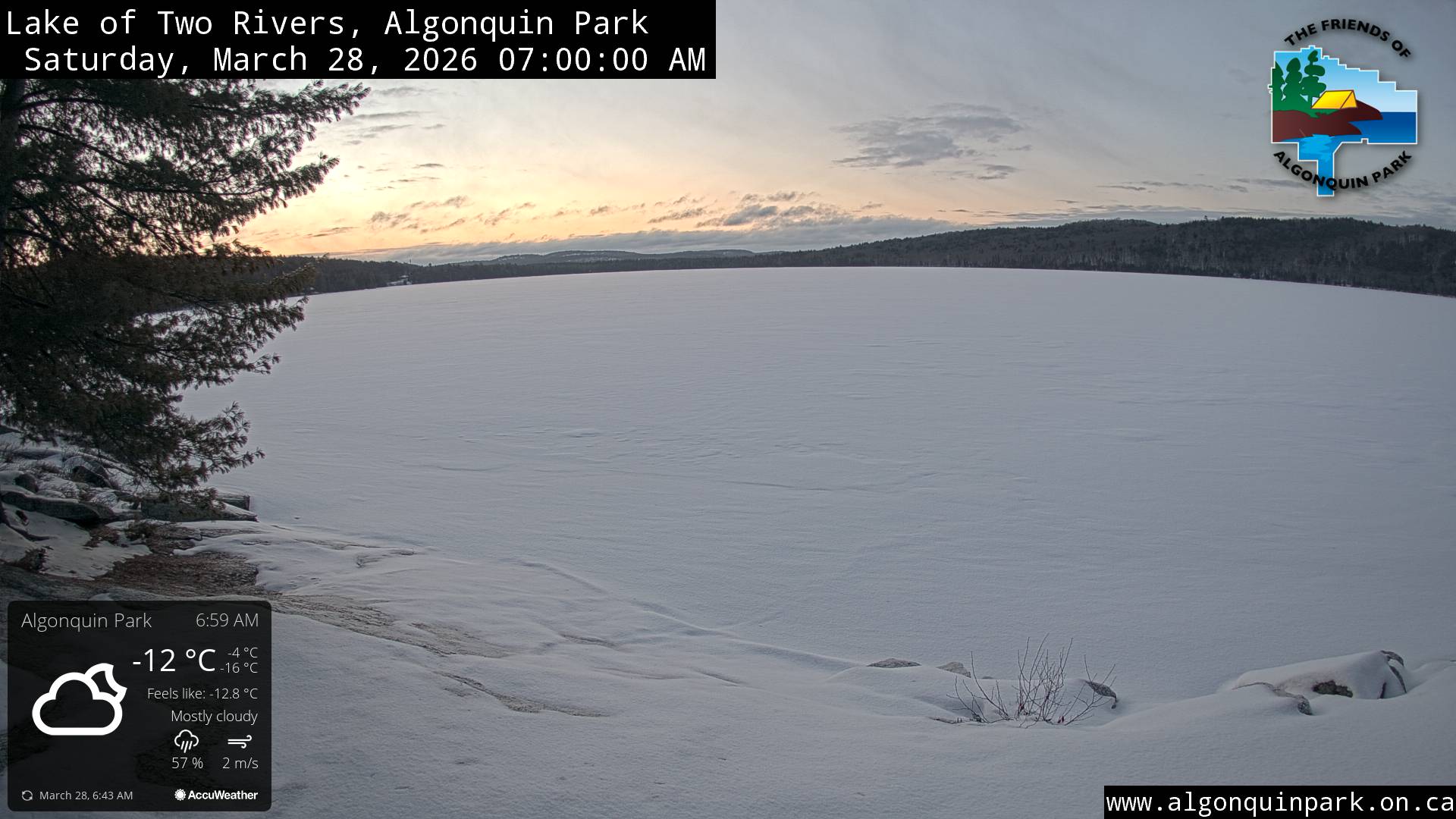
Image: Lake of Two Rivers in Algonquin Park on March 28, 2026 (click to enlarge).
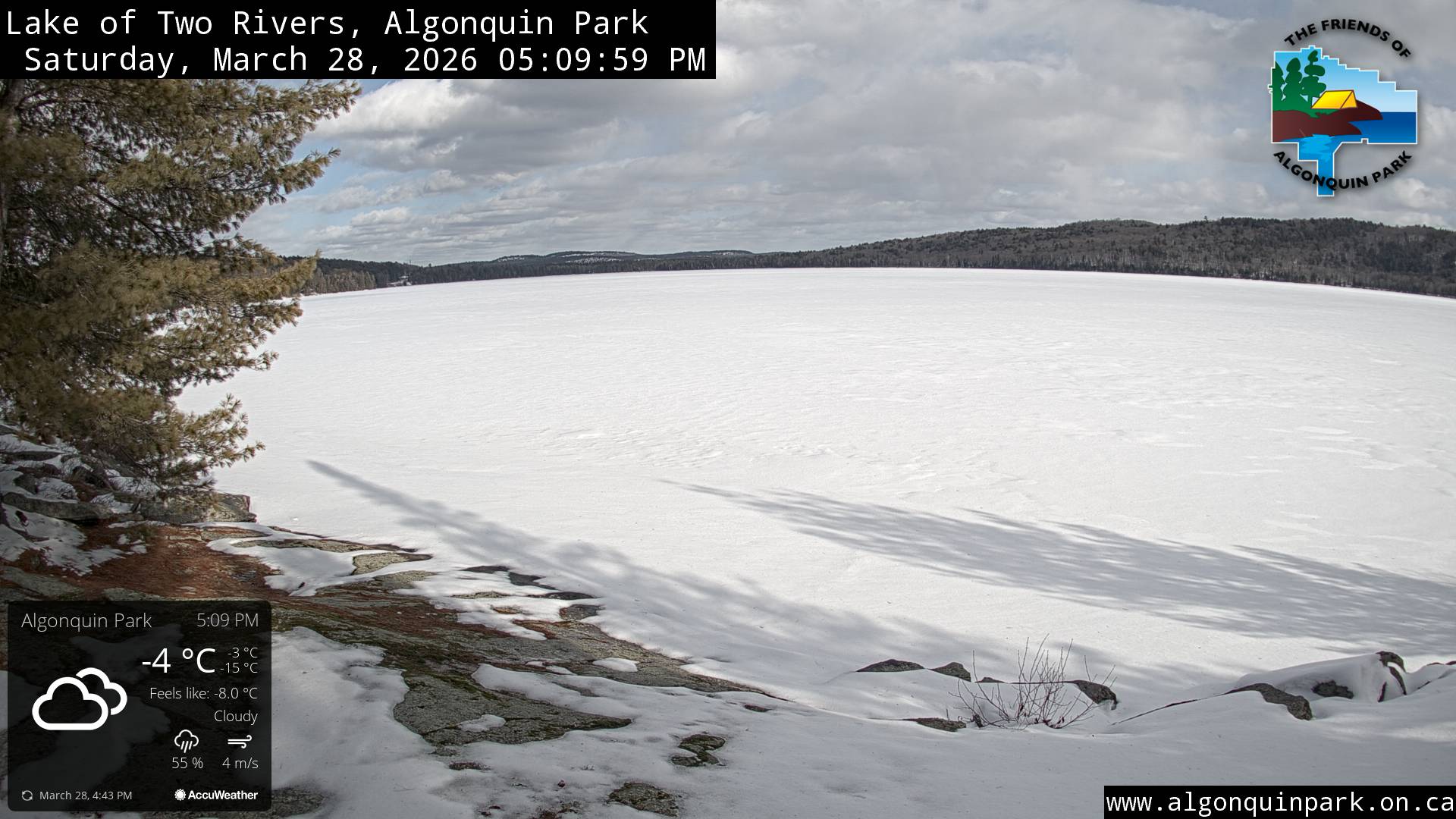
Image: Lake of Two Rivers in Algonquin Park on March 28, 2026 (click to enlarge).
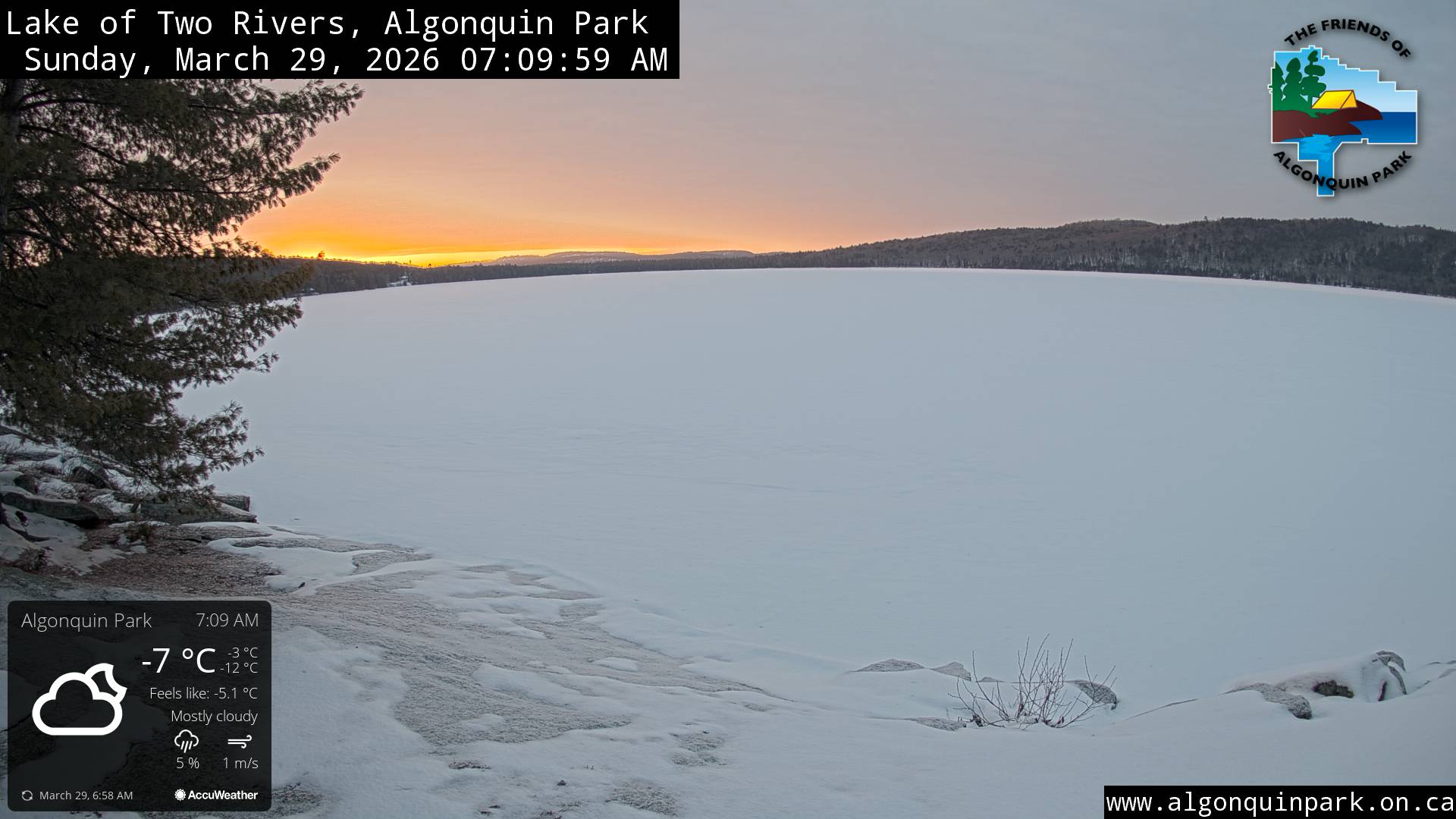
Image: Lake of Two Rivers in Algonquin Park on March 29, 2026 (click to enlarge).
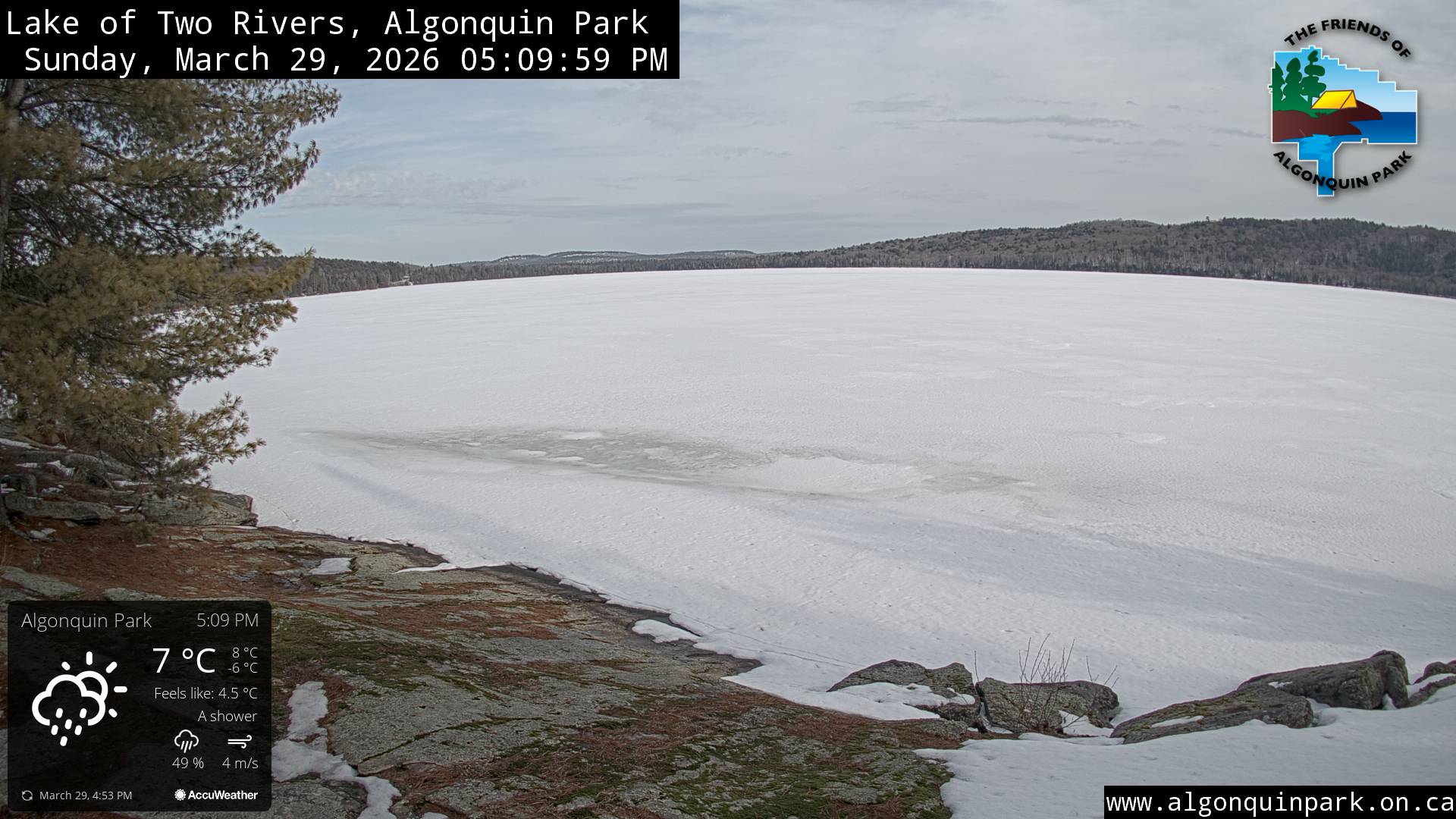
Image: Lake of Two Rivers in Algonquin Park on March 29, 2026 (click to enlarge).
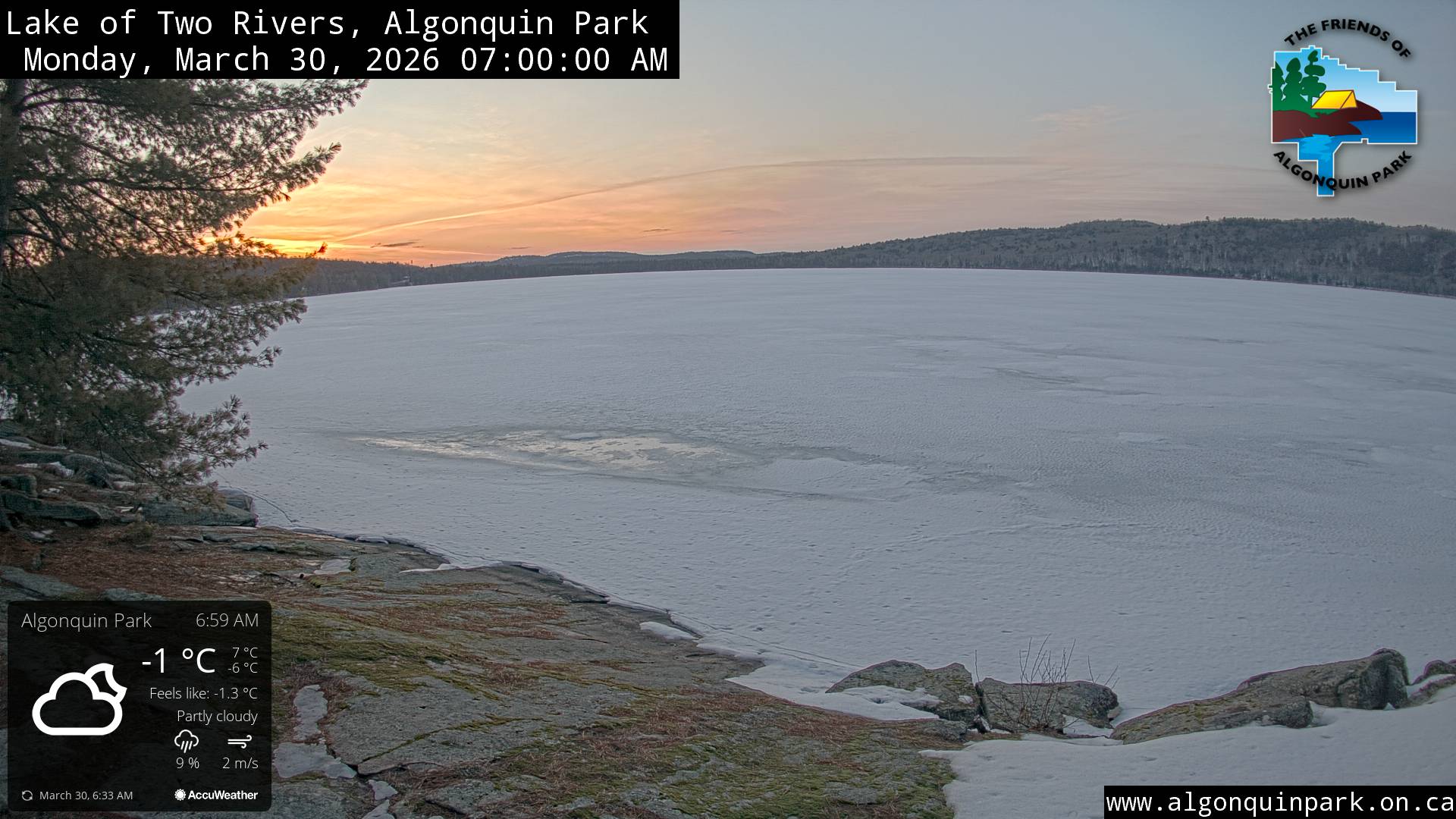
Image: Lake of Two Rivers in Algonquin Park on March 30, 2026 (click to enlarge).
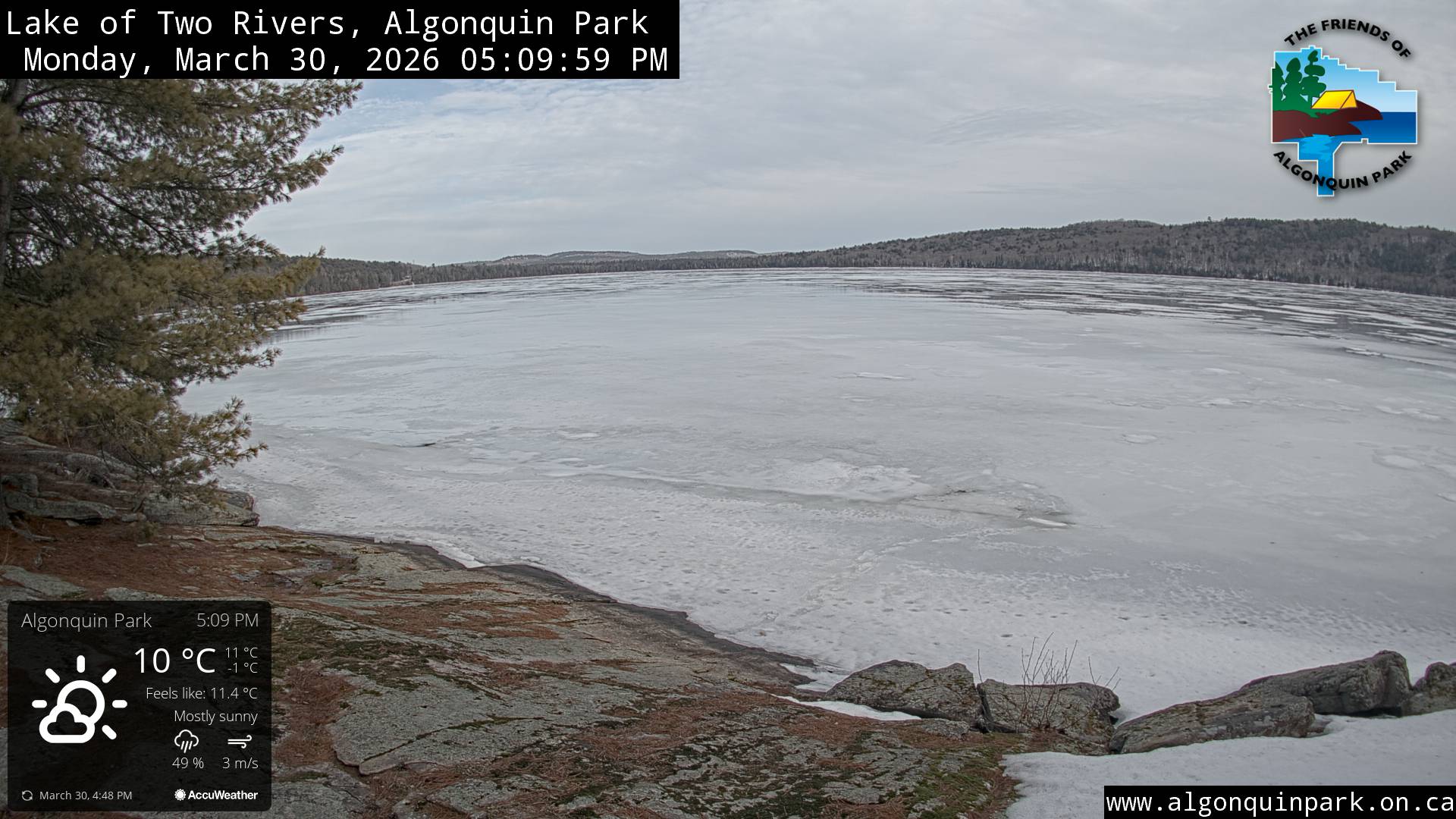
Image: Lake of Two Rivers in Algonquin Park on March 30, 2026 (click to enlarge).
Algonquin Park Ice Out History
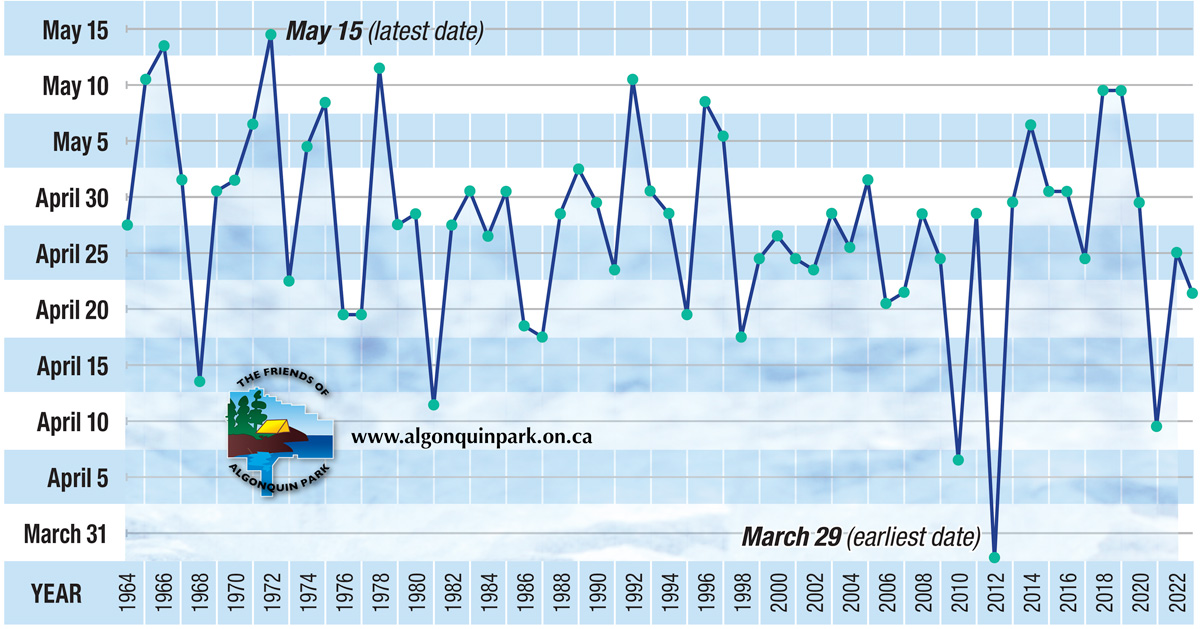
For 60+ years, the average ice out date for Lake Opeongo, Algonquin's largest lake, is April 27. Given variations in winter and spring conditions, the ice out dates for Lake Opeongo have ranged from March 29 (2012) to as late as May 15 (1972). Technically, the official ice out date for Algonquin Park is recorded when a boat can safely navigate from the Lake Opeongo Access Point to the Happy Isle Portage in the North Arm of Lake Opeongo. On average, Lake Opeongo sheds its ice cover 3 days later than Lake of Two Rivers shown above.
2025 Lake of Two Rivers Time-Lapse
The four week time-lapse (below) documents ice out at Lake of Two Rivers using more than 3,220 images. This time-lapse from March 26 to April 27, 2025 is brought to you by The Friends of Algonquin Park, in partnership with Killarney Lodge. Lake of Two Rivers became ice free on April 26, 2025. This date is one day later than the average ice out date observed over the last 45+ years.
Spring and Safety
 Please remember that The Friends of Algonquin Park advises against ice travel due to a range of environmental variables and the difficulty in detecting hazards. Be safe, stay off the ice. Park visitors are encouraged to stay away from fast moving and icy cold water at this time of year.
Water temperature in spring remains just above freezing for many days after ice out. Submersion in cold water can quickly lead to hypothermia (a potentially deadly situation). Reduce the risks, by wearing a PFD, stay close to shore, paddle according to your skill/experience level, pack the proper safety gear, and don't take unnecessary risks.
Cold Water Paddling
Even though Algonquin Park lakes will become ice free, water temperature during spring remains just above freezing for many days after ice out. Submersion in icy cold water can quickly lead to severe hypothermia, a potentially deadly situation. Reduce the risks by:
- wearing a PFD (personal flotation device) while on the water;
- staying close to shore;
- paddling according to your skill/experience level and the weather conditions;
- packing the proper safety gear; and
- not taking unnecessary risks.
- Learning more about hypothermia and cold water before you paddle.
For the latest Algonquin Park closures and restrictions see Algonquin Park Advisories.
Related Information
- Algonquin Park Webcam
- Spring in Algonquin Park
- Current Weather Conditions
- Fishing in Algonquin Park
- The Raven Talks About Fish and Lakes
- Fishes of Algonquin Provincial Park
- Fishing in Algonquin Provincial Park
- Backcountry Canoeing
- Canoe Routes Map of Algonquin Provincial Park - Explore Online